Reading time:
4 mins
Sensory Overload: What to Do in the First 60 Seconds
published
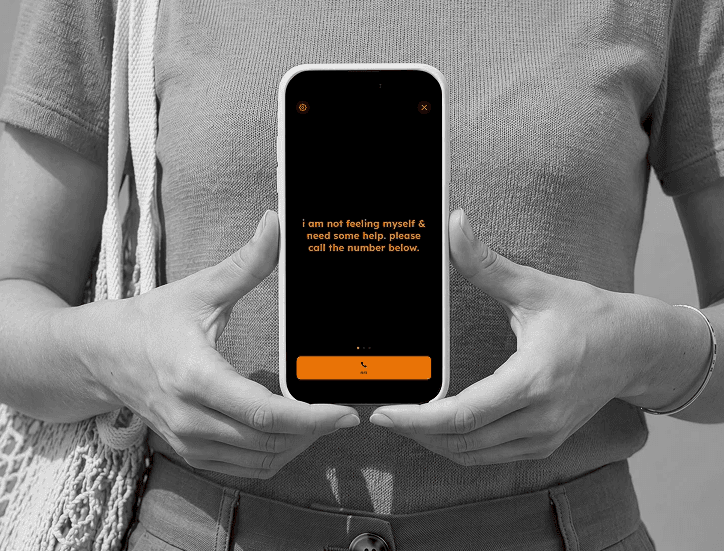
The first minute of sensory overload is the hardest, and it is also the most workable. Once your system tips past its limit, sound gets sharper, light feels heavier, and thinking clearly becomes almost impossible. The good news is that you do not need to think clearly to bring it down. You need a few small physical moves you can do on autopilot. Here is a sequence that takes about a minute.
One note before we start. This is general wellbeing writing, not medical advice. If overload is happening often, or it comes with thoughts of harming yourself, please talk to a doctor or a crisis line. In the UK you can call or text 111, or reach Samaritans on 116 123. In the US you can call or text 988.
0 to 10 seconds: name what is happening
Say it to yourself, even silently. “This is sensory overload. It will pass.” Naming it does something useful. It nudges a sliver of activity back to the thinking part of your brain and reminds you that this is a state, not a permanent fact. You have come out the other side of this before.
10 to 30 seconds: make your exhale longer than your inhale
Forget complicated breathing patterns right now. The only rule that matters is that your out breath is longer than your in breath. Breathe in for a count of four, out for a count of six. A long exhale is the fastest physical signal you can send your nervous system that the threat is over. Extended exhalations stimulate the vagus nerve and activate the parasympathetic nervous system, the body’s calming system, which is why this works even when you cannot think clearly enough to do anything more complicated. Do this three or four times. That is most of your thirty seconds gone, in a good way.
30 to 45 seconds: cut the input down
Overload is too much arriving at once, so take some of it away. If the light is harsh, close your eyes or look down at the floor. If sound is the problem, cover your ears, put in earplugs, or pull up a hood. If you can move somewhere quieter or darker, even a stairwell or a bathroom, do it now. You are not being dramatic. You are removing the thing that is overloading you, which is the most logical move there is.
45 to 60 seconds: anchor on one thing
Pick a single object and give it all of your attention. The weight of your keys, the texture of a sleeve, the cool of a wall against your palm, the pattern on the floor. One input, chosen by you, instead of a hundred coming at you. If you carry something tactile, a smooth stone or a fidget, this is what it is for. The aim is not to distract yourself.
It is to give your senses one quiet thing to hold while the wave passes.
What not to do
A few things tend to make the first minute worse.
Do not try to talk yourself out of it with logic. The part of your brain that handles logic is offline right now, and arguing with yourself just adds noise.
Do not gulp air or breathe fast. It feels like it should help, and it does the opposite.
Do not force yourself to stay put to be polite. Stepping away for two minutes is allowed, and most people understand more than you expect.
Do not reach for your phone and start scrolling. The light and the stream of information are more input, which is the last thing you need.
After the wave
The first 60 seconds are about getting through. Once the peak passes — usually within a few minutes of removing the trigger — there is a second, quieter phase: the comedown. Your system has spent a lot, and you may feel flat, exhausted, or blank. This is not weakness. It is your nervous system resetting after running at maximum. Give it time. A glass of water, a dark or quiet space, and doing nothing in particular for a few minutes is usually enough. Resist the urge to immediately re-join what you left, explain yourself to anyone, or check your phone. The aim is not to recover as fast as possible. It is to let your nervous system finish what it started.
When it is more than overload
Sensory overload usually eases once the input drops and your body settles, often within a few minutes. If you are getting frequent meltdowns or shutdowns, if they last a long time, or if they are bleeding into your sleep, work or relationships, that is worth talking to a professional about. Wanting support is not the same as not coping. Most people who manage this well had help learning how. If you are not sure whether what you experience is sensory overload, the NHS has a guide to sensory processing difficulties that is a useful starting point.
A toolkit you can keep in your pocket
We built Lullogram partly because the moves above are hard to remember in the moment, which is exactly when you need them. SOS mode walks you through a grounding sequence with haptics, so you can feel your way through it without reading a thing. Quiet cards let you show a short written message when speaking is too much. The soundscapes give your ears one steady thing to hold instead of chaos. Most of it sits outside the paywall, and it all works offline, because the moments that matter most should never depend on signal or a subscription.
If today was a lot, be gentle with yourself tonight. You handled it.
Reducing how often it happens
The first 60 seconds guide is for the moments that are already happening. But overload is partly about threshold, some days your capacity is higher, some days it is lower, and the same environment tips you differently depending on how full your system already is. Sleep, food, how much masking you did earlier, whether you had a break at all, all of these affect how quickly you reach your limit. There is no way to eliminate overload if you are wired to sense the world more intensely. But there are ways to keep your baseline lower, which means the same environment hits you less hard. Lullogram’s circadian energy chart shows you where you are in your natural energy cycle, which can help you notice when you are running low before you hit a wall. The sensory tools and breathing exercises are most useful as a regular practice, not just an emergency response, the more often you bring your system down from a moderate level, the less likely it is to tip over at a high one. And on the days when starting anything at all feels impossible, that is often task paralysis, which has its own set of gentle first moves.
written By
Rhys Rabaiotti
I am the maker of lullogram, and I am neurodivergent. I build it from my own loud days, for my son and for friends who feel the same things.
More about why I made it
