Reading time:
5 mins
Why Neurodivergent Brains Struggle With Sleep
published
If you are neurodivergent and you have always been bad at sleep, it is not a character flaw and it is not laziness. ADHD and autistic people have much higher rates of insomnia and disrupted sleep than the general population — studies put the figure at 43–80% of adults with ADHD, compared with around 6–15% in the wider population, and over 80% of autistic people experience significant sleep problems.
One note before we start. This is general wellbeing writing, not medical advice. Ongoing sleep problems are worth raising with a doctor, especially if they are wearing down your days.
A body clock that runs late
Many neurodivergent people have a naturally delayed circadian rhythm, which means the urge to sleep arrives later than the world expects. Research suggests up to 78% of adults with ADHD show a delayed rhythm characteristic of Delayed Sleep Phase Syndrome, a rate far above the general population.Fighting that night after night for years is exhausting, and it is not something you are imagining.
A mind that speeds up at bedtime
For a lot of ADHD brains, the quiet of bedtime is the first moment all day that thoughts have room to run. The distractions are gone, so everything you did not finish, said wrong, or need to do tomorrow shows up at once. Your brain finally has space, and it uses it.
Senses that will not switch off
Autistic and sensory-sensitive people tend to notice what others tune out. The hum of the fridge, a scratchy label, a streetlight leaking through the curtains. At night those inputs do not fade into the background, they get louder, and each one is a small reason to stay awake.
The transition problem
Falling asleep is a transition, and transitions are genuinely hard for a lot of neurodivergent people. Stopping what you are doing, putting the phone down, loosening your grip on your own attention. None of that happens automatically, so the gap between tired and asleep can stretch for hours.
It is not a discipline problem
One thing worth saying plainly: the research on neurodivergent sleep does not point to effort as the missing ingredient. Sleep for ADHD and autistic people is harder at a biological level, from the timing of melatonin release to the threshold at which sensory signals trip the nervous system into alertness. Approaches that work for most people, a fixed bedtime, a dark room, no screens, can help at the margins, but they do not address the underlying mechanisms. This is why most neurodivergent people have already tried everything that gets recommended, and why none of it quite stuck. The tools that actually help are the ones that work with a wired nervous system rather than asking it to simply stop.
What gently helps
None of these are about discipline. They are about working with your brain instead of against it.
Anchor your wake time, not your bedtime. A consistent time to get up does more for your body clock than forcing an early bedtime. Add some daylight soon after waking if you can.
Give your senses one thing to hold. A single, steady input can crowd out the dozen small ones keeping you alert. A soundscape often works better than silence for a busy mind. If you are not sure what to play, soundscapes vs white noise for sleep breaks down the difference.
Make the transition softer and shorter. A long, complicated wind-down routine is just more things to do. A short, predictable one you can actually keep is worth more.
Lower the stakes. Lying there anxious about not sleeping keeps you awake more than the original problem did. A night of bad sleep is survivable. Taking the pressure off often helps sleep arrive on its own.
A gentler way to notice your patterns
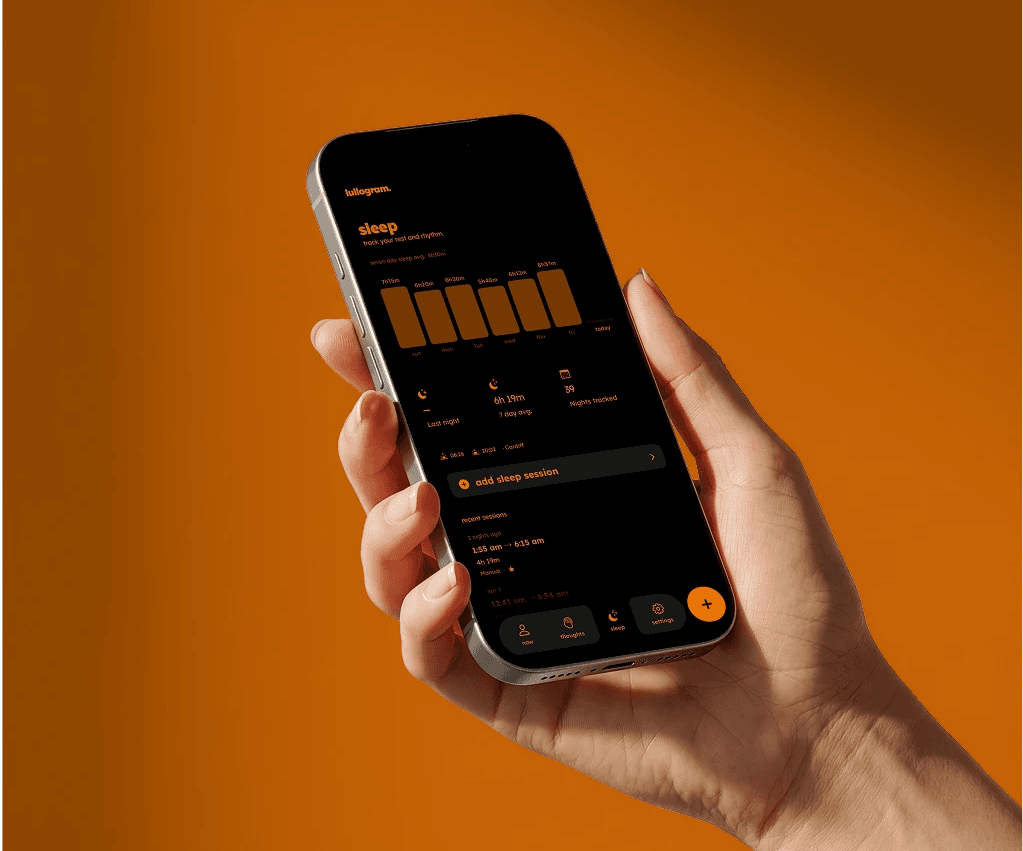
Lullogram tracks your circadian energy through the day, so you can see when your body actually wants to wind down rather than when you are told to. Sleep syncs with Apple Health, or you can log it by hand, and the soundscapes can be felt as gentle haptics as well as heard, which gives a restless mind something physical to settle on. It is designed to help you notice patterns gently, without turning sleep into one more thing to score yourself on.
Be kind to yourself about this. A brain that struggles to sleep is not a broken one.
A note on sleep debt
Chronic poor sleep adds up. One or two rough nights are recoverable; months or years of disrupted sleep build a deficit that affects mood, attention, and how hard the next bad night hits. If this is a long-running pattern rather than a recent one, it is worth mentioning to a GP or sleep specialist, not because it is unfixable, but because some of the biological causes (delayed circadian phase, for example) have straightforward treatments alongside the self-help approaches here.
written By
Rhys Rabaiotti
I am the maker of lullogram, and I am neurodivergent. I build it from my own loud days, for my son and for friends who feel the same things.
More about why I made it
